The U.S. pet food industry generates over $50 billion annually, and a significant portion of that money flows toward products making "natural," "raw," or "clean" claims that carry no standardized legal definition. Raw Paws Pet Food is one of a growing number of brands positioning itself against that backdrop — emphasizing single-ingredient sourcing, no artificial preservatives, and USDA-inspected facilities.
This article examines what those claims mean in practice, which products are worth considering under organic and pet-safe">pet-safe filters, and where the caveats are.
About Raw Paws Pet Food
Raw Paws Pet Food is a U.S.-based pet food and treat company that focuses on minimally processed, species-appropriate nutrition for dogs and cats. Their product line centers on freeze-dried raw food, dehydrated treats, raw frozen options, and nutritional supplements. The brand markets directly to health-conscious pet owners who are skeptical of conventional kibble.
Products are manufactured in USDA-inspected facilities, which is a meaningful baseline. [1] USDA inspection means the facility and its processes meet federal standards for sanitary handling and labeling — but it does not independently certify ingredient quality or guarantee organic status. These are different things, and the distinction matters.
Raw Paws does not carry a USDA Organic certification across its full product line. Some ingredients are described as coming from natural or free-range sources, but without third-party organic certification, those descriptors are marketing language rather than regulated claims. [2] If organic certification is your primary filter, verify individual product labels rather than relying on brand-level language.
Where Raw Paws does stand out is in what it leaves out. Their treats and food products consistently avoid artificial preservatives, fillers, grains (in most lines), added hormones, and artificial colors. Single-ingredient treats — like rabbit, beef, or chicken — contain exactly what the name says. That simplicity is genuinely useful for pet owners managing food sensitivities or trying to trace an allergic reaction. [3]
The brand sources from domestic suppliers where possible, though some proteins — including certain wild-caught options — may be sourced internationally. Their website does not publish a comprehensive sourcing map, which is a gap worth flagging. Transparent supply chain documentation is one of the clearest signals of a brand that has nothing to hide. Raw Paws is forthcoming about what goes into products; where the ingredients come from geographically is less consistently disclosed. [4]
Top Products Worth Knowing
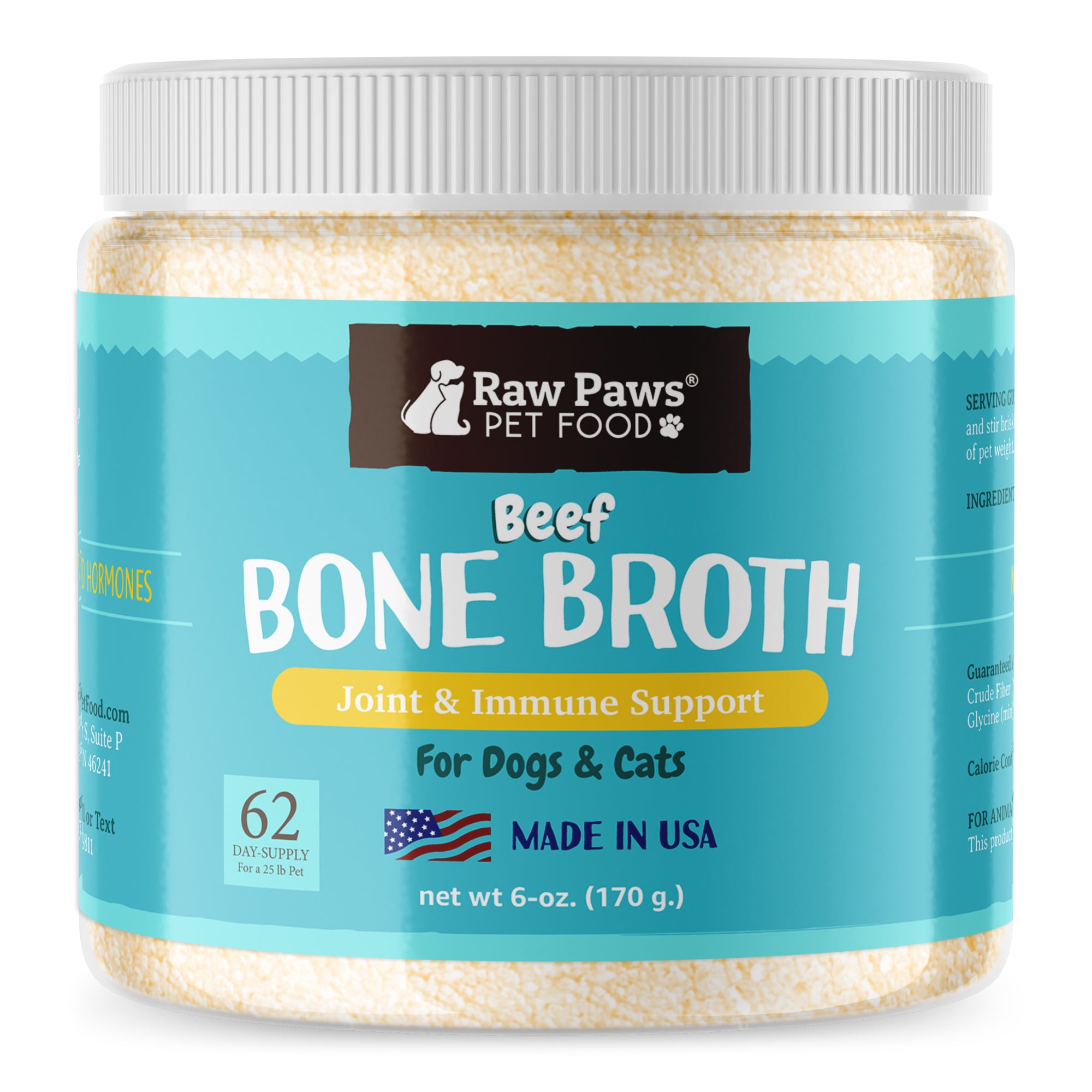
Beef Bone Broth Supplement Powder for Dogs & Cats, 6-oz
Bone broth has legitimate nutritional support behind it — collagen, glycine, and glucosamine are present in meaningful amounts when broth is made from quality bones. [5] This powdered version is convenient for mixing into food and avoids the sodium load that makes many commercial broths unsuitable for pets. Single-protein sourcing (beef) keeps the ingredient list clean, which is useful for dogs with protein sensitivities.
See price →
Wild-Caught Rabbit Treats for Dogs, 6-oz
Rabbit is a novel protein — meaning most dogs haven't been exposed to it — which makes it a strong candidate for elimination diets and allergy management. [6] Wild-caught sourcing typically means lower fat content and a different nutritional profile than farm-raised. The single-ingredient claim here is straightforward: rabbit, nothing else. That's the right answer for a treat.
See price →
Freeze Dried Pet Food for Dogs & Cats — Chicken Recipe, 16-oz
Freeze-drying preserves nutritional content more effectively than high-heat processing, which is the core argument for this format over conventional kibble. [7] The chicken recipe is formulated to be nutritionally complete for both dogs and cats, which is convenient for multi-pet households but worth verifying against AAFCO adequacy statements on the label. No artificial preservatives means shorter shelf life once opened — store accordingly.
See price →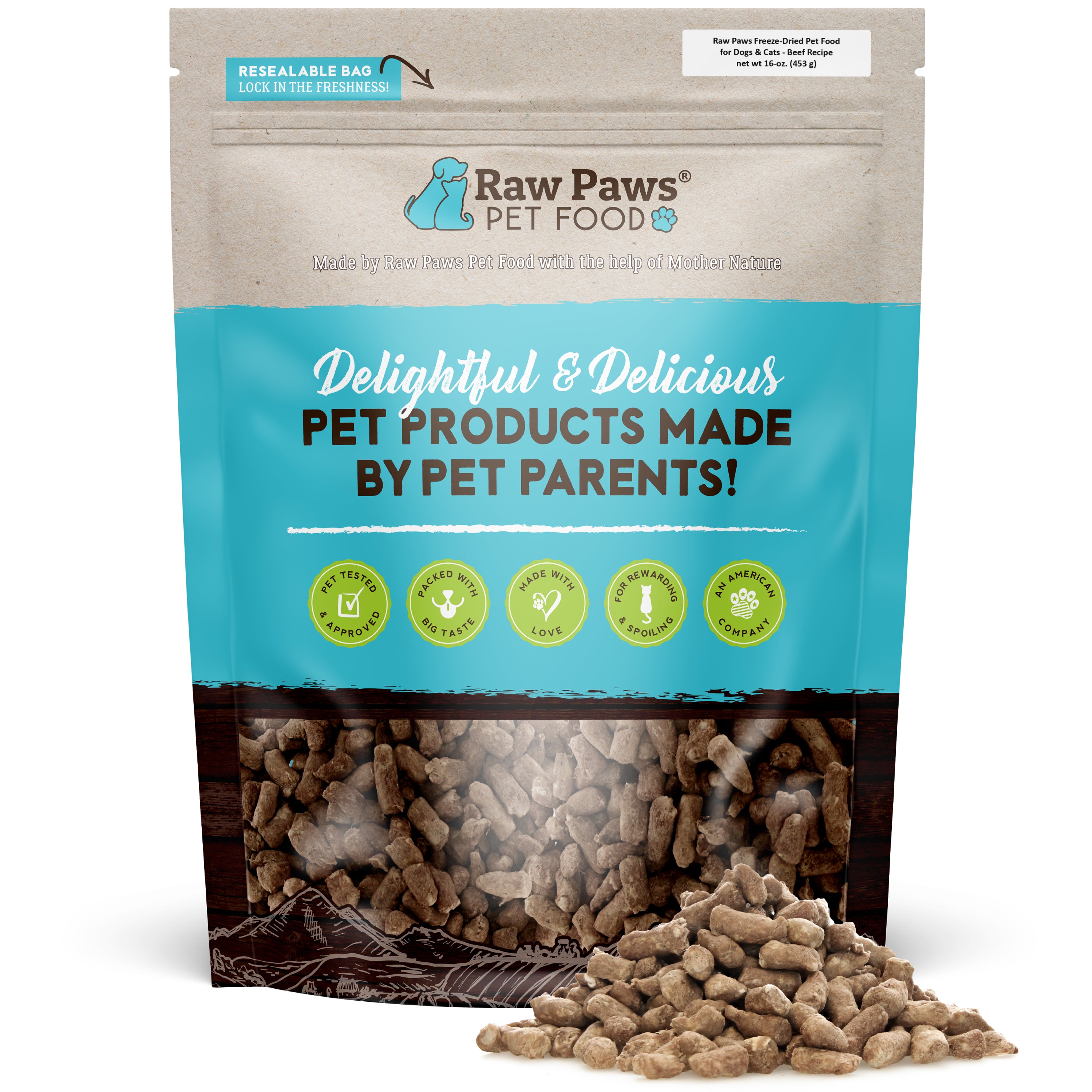
Freeze Dried Pet Food for Dogs & Cats — Beef Recipe, 16-oz
Beef-based freeze-dried food gives you a red meat protein source without the processing that strips heat-sensitive nutrients. For dogs that do well on beef and owners avoiding chicken due to sensitivity concerns, this is a practical rotation option. Check the AAFCO statement — a product labeled "complete and balanced" has met minimum nutrient profiles; one labeled "for supplemental feeding" has not. [8]
See price →Why These Certifications Matter
The organic filter exists because the term is regulated at the federal level — USDA Organic certification requires third-party verification that ingredients were grown without synthetic pesticides, artificial fertilizers, or GMOs. Raw Paws does not carry this certification across its product line. That doesn't make the products unsafe, but it does mean "natural" and "organic" are not interchangeable here. If pesticide-free sourcing is your priority, look for the USDA Organic seal on individual products rather than the brand's general positioning.
The pet-safe filter addresses ingredients and additives that are known to be harmful to dogs and cats — including xylitol, grapes, certain essential oils, artificial sweeteners, and preservatives like BHA, BHT, and ethoxyquin. Raw Paws products are formulated without these additives, which is a real differentiator from many conventional pet food brands. [9] Single-ingredient treats also reduce the surface area for hidden harmful compounds. That said, even "natural" ingredients can cause problems in the wrong context — high-fat treats like marrow or certain fish can trigger pancreatitis in susceptible dogs. Introduce new proteins gradually and consult a vet if your pet has a known condition.
Frequently Asked Questions
Is Raw Paws Pet Food USDA certified organic?
No. Raw Paws products are made in USDA-inspected facilities, which means the manufacturing process meets federal sanitation and labeling standards. That is not the same as USDA Organic certification, which requires third-party verification of ingredient sourcing. Some Raw Paws ingredients may come from natural or free-range sources, but without the USDA Organic seal on a specific product, the organic claim is not federally verified.
Is freeze-dried raw pet food actually safer than raw frozen?
Freeze-drying reduces — but does not eliminate — pathogen risk. The process removes moisture, which inhibits bacterial growth during storage, but the USDA and FDA both note that freeze-dried raw foods can still carry Salmonella, Listeria, and E. coli. Handling precautions apply: wash hands and surfaces after serving, and keep immunocompromised people away from preparation areas. Freeze-dried food does preserve heat-sensitive nutrients better than kibble, which is a genuine nutritional advantage.
Are Raw Paws treats safe for cats as well as dogs?
Many Raw Paws products are labeled for both dogs and cats, including some freeze-dried food lines. However, cats have specific nutritional requirements — including taurine and arachidonic acid — that differ significantly from dogs. Check whether individual products carry an AAFCO adequacy statement for cats specifically. Single-ingredient treats are generally safe for both species as occasional supplements, but should not replace a nutritionally complete diet.
What preservatives does Raw Paws use?
Raw Paws does not use artificial preservatives like BHA, BHT, ethoxyquin, or sodium nitrite. Freeze-drying itself acts as a natural preservation method by removing moisture. Some products may use natural preservatives like mixed tocopherols (vitamin E). Because there are no synthetic preservatives, opened products have a shorter shelf life than conventional pet food — follow the storage instructions on the package.
How does Raw Paws compare to other raw pet food brands?
Raw Paws sits in the mid-tier of the raw and freeze-dried pet food market. It competes with brands like Stella & Chewy's, Primal, and Instinct. Its differentiation is the single-ingredient treat line and the accessible price point relative to some premium competitors. The gap compared to higher-end brands is supply chain transparency — Raw Paws does not publish detailed sourcing documentation. Brands like Primal and Open Farm offer more granular sourcing disclosure, which may matter depending on your priorities.
References
- USDA Food Safety and Inspection Service. (2024). About FSIS: Inspection & Enforcement. U.S. Department of Agriculture. https://www.fsis.usda.gov/inspection ↩
- USDA Agricultural Marketing Service. (2023). Organic Labeling Standards. U.S. Department of Agriculture. https://www.ams.usda.gov/grades-standards/organic-labeling-standards ↩
- Verlinden, A., Hesta, M., Millet, S., & Janssens, G.P.J. (2006). Food allergy in dogs and cats: A review. Critical Reviews in Food Science and Nutrition, 46(3), 259–273. https://doi.org/10.1080/10408390591001168 ↩
- FDA Center for Veterinary Medicine. (2023). Pet Food Labels — General. U.S. Food & Drug Administration. https://www.fda.gov/animal-veterinary/animal-food-feeds/pet-food-labels-general ↩
- Shaw, G., Lee-Barthel, A., Ross, M.L., Wang, B., & Baar, K. (2017). Vitamin C–enriched gelatin supplementation before intermittent activity augments collagen synthesis. American Journal of Clinical Nutrition, 105(1), 136–143. https://doi.org/10.3945/ajcn.116.138594 ↩
- Olivry, T., & Mueller, R.S. (2017). Critically appraised topic on adverse food reactions of companion animals: Comparing elimination diets and plasma or serum IgE tests. BMC Veterinary Research, 13(1), 1–6. https://doi.org/10.1186/s12917-017-1048-z ↩
- Ratti, C. (2001). Hot air and freeze-drying of high-value foods: A review. Journal of Food Engineering, 49(4), 311–319. https://doi.org/10.1016/S0260-8774(00)00228-4 ↩
- Association of American Feed Control Officials. (2023). AAFCO Dog and Cat Food Nutrient Profiles. AAFCO. https://www.aafco.org/consumers/understanding-pet-food ↩
- Cortinovis, C., & Caloni, F. (2016). Household food items toxic to dogs and cats. Frontiers in Veterinary Science, 3, 26. https://doi.org/10.3389/fvets.2016.00026 ↩